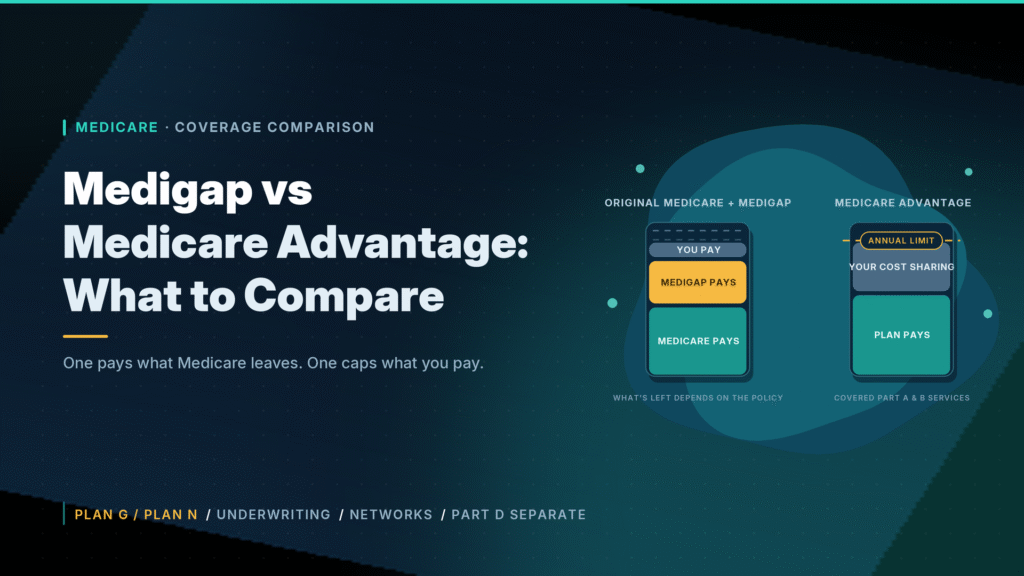
Medigap and Medicare Advantage address different needs. Medigap helps pay certain expenses left over after Original Medicare pays. Medicare Advantage provides your Medicare benefits through a Medicare-approved private health plan.
The choice affects your monthly budget, access to doctors, prescription coverage and options for changing coverage later. A useful comparison looks at the complete insurance arrangement and the care you expect to need.
How Medigap and Medicare Advantage work
Medigap, also called Medicare Supplement Insurance, works alongside Original Medicare Parts A and B. Medicare pays its share of covered expenses, and your Medigap policy pays eligible remaining costs according to its benefits. You remain responsible for expenses neither covers.
Medicare Advantage, also called Part C, is another way to receive your Medicare coverage. Most plans include prescription drug coverage, and some offer additional benefits.
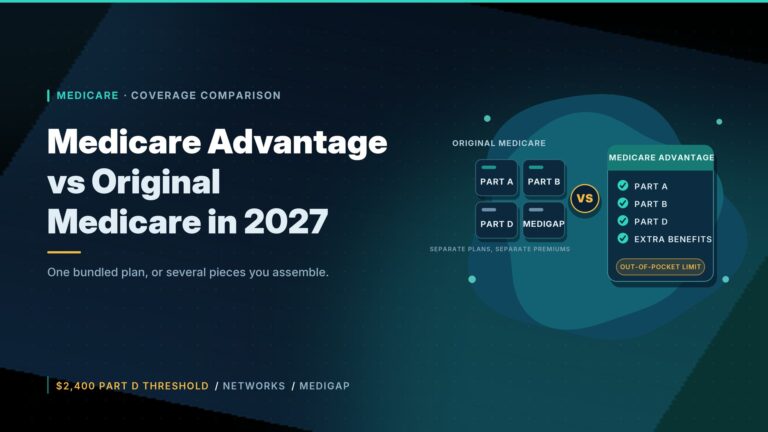
Medigap cannot pay Medicare Advantage copayments, deductibles or premiums. The practical comparison is usually Original Medicare plus Medigap and a separate drug plan versus Medicare Advantage with drug coverage.
| What to compare | Original Medicare with Medigap | Medicare Advantage |
|---|---|---|
| Main purpose | Medigap pays specified Original Medicare cost sharing | Provides Medicare benefits through a private plan |
| Premiums | Part B, Medigap and usually a separate Part D premium; Part A if applicable | Part B and any plan premium; Part A if applicable |
| Doctors and hospitals | Generally providers accepting Medicare nationwide; Medicare SELECT policies have additional restrictions | Network rules depend on the plan |
| Medical expenses | Remaining costs depend on the Medigap policy | Plan deductibles, copayments and coinsurance apply |
| Annual medical protection | Depends on the Medigap benefits purchased | Annual spending limit for covered Part A and Part B services |
| Prescription coverage | Purchased separately when needed | Included in most plans |
| Enrollment considerations | Purchasing rights depend on timing, circumstances and state protections | Enrollment must occur during an applicable enrollment period |
Review the actual policies available in your area, because premiums, benefits and access rules differ.
Compare annual spending, including premiums and treatment costs
A low monthly premium answers only part of the affordability question. Consider both the payments you make every month and the expenses that arise when you receive care.
For Medigap, premiums vary by insurer, location and policy. Compare the same standardized plan letter across companies, obtain an official quote and ask how premiums may change over time. Premium amounts typically increase; a policy’s current price does not establish its future cost.
Use this worksheet for each option:
| Expense | What to record |
|---|---|
| Annual premiums | All applicable Medicare, Medigap, Medicare Advantage and drug-plan premiums |
| Routine medical care | Expected payments for appointments, tests and ongoing treatment |
| Hospital and outpatient services | Your share of costs under each coverage arrangement |
| Prescription drugs | Estimated annual spending using your exact medications and pharmacies |
| Uncovered services | Expenses for care or benefits outside the policy |
| A year with more treatment | How additional visits, procedures or hospitalization would affect your budget |
Calculate:
Estimated annual spending = premiums + expected medical and prescription cost sharing + expected uncovered expenses.
Count each expense once. For example, do not add a deductible again if it is already included in your estimated treatment costs.
Prepare an expected-use scenario and another involving substantially more care. This helps reveal whether an affordable premium comes with treatment costs you would struggle to manage.
Understand the protection against large medical bills
Medicare Advantage plans have an annual out-of-pocket limit for covered Part A and Part B services. Check the applicable network limits and review prescription spending separately. The medical limit is not a ceiling on every expense, including premiums and uncovered care.
Medigap reduces specified Original Medicare expenses according to the policy’s benefits. Different letters leave different costs to the beneficiary, and some policies have high-deductible versions.
For example, standard Plan G and Plan N have different cost-sharing features. Plan N can require copayments for certain office and emergency department visits and does not cover Part B excess charges. Neither covers the Part B deductible. High-deductible Plan G operates differently from standard Plan G. Medicare.gov: Compare Medigap benefits
Ask for a written explanation of what you would still pay under the exact policy being quoted.
Check access to your doctors and hospitals
Begin with the providers involved in your care: your primary care doctor, specialists, preferred hospital, laboratories and equipment suppliers.
Medicare Advantage HMOs generally require network providers for routine care, subject to exceptions. PPOs generally permit covered out-of-network care at a higher cost. Referral and prior authorization requirements also vary. Medicare.gov: Medicare Advantage plan types
Confirm participation with both the provider and insurer using the exact plan name and identification details. Accepting an insurance company does not establish participation in every plan it sells.
With Original Medicare and a standard Medigap policy, the starting question is whether the provider accepts Medicare. If comparing a Medicare SELECT policy, investigate its provider restrictions separately.
If you spend several months away from home, check access to scheduled care in both locations. Emergency coverage alone does not answer how routine appointments will work.
For broader context, see our comparison of Medicare Advantage and Original Medicare in 2027.
Review prescription coverage as a separate decision
Medigap policies sold after 2005 do not include prescription drug coverage. Someone buying Medigap today can add a standalone Medicare Part D plan.
For either a standalone drug plan or Medicare Advantage drug coverage, compare your actual medication list. Check the drug’s name, strength, quantity, pharmacy and any coverage restrictions.
Bundled drug coverage can be convenient, but the relevant question is whether it covers your prescriptions on affordable terms. A Medigap quote alone does not show the cost of the complete coverage package.
Understand Medigap purchasing rights before choosing or switching
Your enrollment timing can affect your ability to obtain Medigap.
The federal Medigap Open Enrollment Period generally lasts six months, starting on the first day of the month when you are both 65 or older and enrolled in Part B. During this period, an insurer cannot deny an available policy or charge more because of your health.
Outside that period, an insurer may use medical underwriting unless you have a guaranteed-issue right or additional protection under state law. For people younger than 65, federal law generally does not require insurers to sell Medigap; state rules determine additional opportunities.
The annual fall enrollment period does not automatically give you a fresh Medigap purchasing guarantee.
Specific trial rights may apply. For example, certain people who first try Medicare Advantage have a limited opportunity to return to Original Medicare and obtain Medigap. The details depend on how and when they joined.
Before making a change, establish:
- Whether you qualify for the Medigap policy you want.
- Whether medical underwriting applies.
- The approved premium and effective date.
- How the change affects prescription coverage.
Obtain confirmation before allowing existing coverage to end. Medicare recommends getting official quotes and retaining policy documentation.
Look beyond advertised dental, vision and hearing benefits
Medicare Advantage plans may offer additional benefits, but their value depends on covered services, participating providers, member payments and benefit limits.
Medigap generally does not cover routine dental or vision care, hearing aids or long-term custodial care. Some policies provide limited foreign-travel emergency benefits. These features should be checked individually.
Assign value to benefits you can realistically use. An allowance with limited participating providers may contribute less to your decision than dependable access to an established specialist.
Make the comparison around your priorities
Neither coverage arrangement is the best fit for everyone.
Someone who values access to Medicare providers across several locations may place more weight on Original Medicare with Medigap. Someone comfortable with a local provider network may find a Medicare Advantage plan worth closer examination.
In either case, test the choice against four questions:
- Can I access the providers and treatments important to me?
- Can I afford the premiums and remaining expenses?
- Does the prescription coverage fit my medications?
- What options would I have if I wanted to change coverage later?
If selecting coverage for 2027, Medicare’s annual Open Enrollment runs October 15–December 7, 2026, with changes generally effective January 1, 2027. Medigap purchasing rights follow separate rules.
Our Medicare Open Enrollment dates and comparison checklist can help organize the review.
For personalized assistance, contact your State Health Insurance Assistance Program, or SHIP. These programs provide free help with coverage choices, costs and Medicare questions.