Choosing between Medicare Advantage and Original Medicare for 2027 means comparing more than monthly premiums. Your doctors, prescriptions, potential medical bills and ability to change coverage later all deserve attention.
Original Medicare provides Part A and Part B coverage through the federal program. Medicare Advantage offers another way to receive those benefits through a Medicare-approved private health plan, usually with prescription drug coverage included. Both are Medicare, but they differ in how you access care and pay for it.
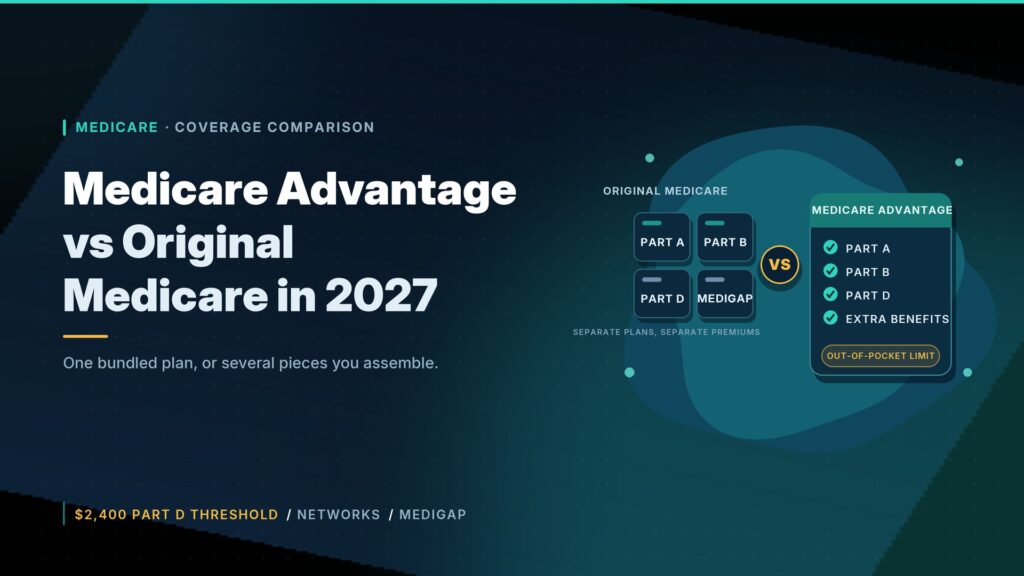
For a useful comparison, consider the complete coverage package: Original Medicare with a separate Part D plan and, where appropriate, Medigap, compared with a Medicare Advantage plan that includes drug coverage.
Medicare Advantage vs Original Medicare: a comparison
| Feature | Original Medicare | Medicare Advantage |
|---|---|---|
| Administration | Federal Medicare program | Medicare-approved private insurer |
| Core coverage | Part A hospital and Part B medical benefits | Part A and Part B benefits through the plan |
| Doctors and hospitals | Providers that accept Medicare nationwide | Network rules generally apply; some plans cover out-of-network care |
| Specialist referrals | Usually unnecessary | Depends on the plan |
| Prior authorization | Usually unnecessary, with exceptions | May be required for certain services |
| Prescription drugs | Add a separate Part D plan | Included in most plans |
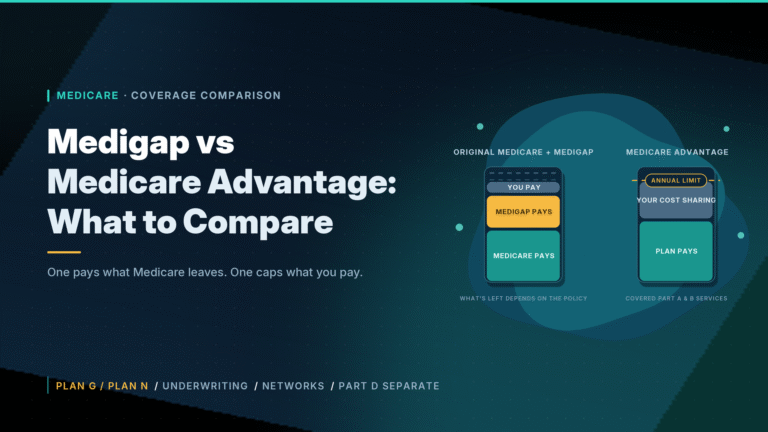
| Annual medical spending limit | No built-in annual limit under Parts A and B alone | Annual limit for covered Part A and Part B services |
| Medigap | Can supplement eligible Original Medicare expenses | Cannot pay Medicare Advantage expenses |
| Additional benefits | Limited routine dental, vision and hearing coverage | May include additional benefits, subject to plan limits |
These are general differences. Individual Medicare Advantage plans have different networks, costs and coverage conditions.
Which Medicare costs are confirmed for 2027?
Some 2027 figures are national benefit parameters. Others are projections or amounts set by individual insurers.
| Cost measure | 2027 figure | What it means |
|---|---|---|
| Maximum Part D deductible | $700 | A plan may charge less or have no deductible |
| Part D annual out-of-pocket threshold | $2,400 | Applies to covered Part D drugs, with qualifying payments counted toward the threshold |
| Projected average Medicare Advantage monthly plan premium | $12 | A national weighted average, not the price of every plan |
| Projected average standalone Part D monthly premium | $36 | A national average, not a local plan quote |
The Part D figures appear in Medicare.gov’s drug-cost guidance. The premium projections come from CMS’s September 28, 2026 announcement.
The projected $12 Medicare Advantage premium does not represent the full cost of Medicare coverage. Beneficiaries generally continue paying their Part B premium, and medical and prescription cost sharing can apply.
At this article’s October 19 review, Medicare.gov’s main Part A and Part B cost tables still displayed 2026 amounts. Those figures should not be presented as confirmed 2027 rates. Check the official Medicare cost page before completing a 2027 budget.
Compare the full annual cost
A $0 Medicare Advantage plan premium does not mean healthcare is free. Similarly, a higher monthly premium for supplemental coverage does not automatically mean the entire year will cost more.
Build a comparison using the actual plans available where you live.
| Expense to compare | Original Medicare coverage package | Medicare Advantage coverage package |
|---|---|---|
| Medicare premiums | Part B, plus Part A if applicable | Part B, plus Part A if applicable |
| Additional insurance premiums | Separate Part D and optional Medigap premiums | The plan’s premium; check whether drug coverage is included |
| Medical expenses when receiving care | Deductibles and coinsurance remaining after any supplemental coverage | Plan deductibles, copayments and coinsurance |
| Prescription expenses | Costs under the selected standalone Part D plan | Costs under the plan’s included Part D coverage |
| Services outside coverage | Budget separately | Budget separately, including expenses beyond supplemental benefit limits |
| Protection during an expensive medical year | Depends on Medigap or other supplemental coverage; Original Medicare alone has no annual medical cap | Review the plan’s medical out-of-pocket limit and applicable network rules |
Medigap helps pay specified Original Medicare expenses; it does not replace Medicare or provide a general allowance for every uncovered service.
A practical calculation is:
Estimated annual cost = annual premiums + expected medical cost sharing + expected prescription cost sharing + expected uncovered expenses.
Count deductibles within cost sharing, rather than adding them again after they have already been included in your estimate.
Prepare two versions: an expected year based on your current care, and a year involving substantially more treatment. This shows whether a plan remains affordable when healthcare needs change.
Understand what an out-of-pocket limit protects
Medicare Advantage’s medical spending limit applies to covered Part A and Part B services under the plan’s rules. It is separate from Part D prescription drug protection. Premiums and expenses for services outside coverage should be budgeted separately. Plans covering out-of-network care may have different applicable limits.
For 2027, once qualifying out-of-pocket spending reaches the $2,400 Part D threshold, beneficiaries pay nothing further for covered Part D drugs for the rest of the calendar year. This protection applies to standalone drug plans and Medicare Advantage plans with drug coverage.
The deductible counts toward that threshold; it is not an additional $700 charged above the $2,400 limit. The threshold is also not a cap on all healthcare spending or every prescription purchased outside coverage.
Check access to care before comparing extra benefits
Network structure can matter as much as price.
Medicare Advantage HMOs generally require network providers for routine care, subject to exceptions. PPOs generally allow covered out-of-network care at a higher cost. Emergency and urgently needed care have different protections from ordinary scheduled appointments.
For every shortlisted plan, verify:
- Your primary care doctor and specialists.
- Your preferred hospital and outpatient facilities.
- Laboratories, imaging centers and equipment suppliers you use.
- Access to routine care if you spend part of the year elsewhere.
Ask both the provider and insurer about the exact plan, rather than relying on whether the office accepts the insurance company generally.
Someone who regularly receives care in two states should investigate access in both locations before treating a lower premium as a saving.
Prior authorization deserves a separate check
Medicare Advantage plans may require approval before covering certain services. Review the plan’s requirements for treatments you already receive or expect to need.
Original Medicare also has exceptions to its usual approach. For example, CMS’s WISeR model covers selected services in Arizona, New Jersey, Ohio, Oklahoma, Texas and Washington. Participating providers can use prior authorization or face prepayment medical review for those services. It is therefore inaccurate to describe Original Medicare as universally free of authorization or advance review requirements.
Medigap enrollment rules can affect your future options
Medigap is an important consideration when comparing coverage over several years.
The federal Medigap Open Enrollment Period generally lasts six months, beginning on the first day of the month when you are both 65 or older and enrolled in Part B. During that period, health conditions cannot be used to deny an available policy or charge more.
Outside that window, an insurer may use medical underwriting unless you qualify for a guaranteed-issue protection or additional rights under state law. Some people also have specific trial rights when leaving Medicare Advantage.
The annual fall Medicare enrollment period does not automatically create a new right to buy Medigap without underwriting. Before leaving Medicare Advantage, verify the Medigap policy you can obtain, its price and its effective date.
Evaluate dental, vision and other benefits realistically
Medicare Advantage plans may include dental services, vision care, hearing benefits, fitness programs or transportation. These benefits can be useful, but coverage is generally limited and eligibility conditions may apply.
Before assigning a dollar value to an advertised benefit, check:
- Which services qualify.
- Whether participating providers are available.
- Any annual allowance, frequency limit or member payment.
- Whether you would actually use it.
A benefit you cannot access or do not need should carry little weight in your comparison.
How to decide which option deserves closer consideration
The following are comparison priorities, rather than recommendations for a particular person.
| Your priority | What to examine first |
|---|---|
| Keeping several established specialists | Confirm access to every provider under each option |
| Predictable monthly budgeting | Compare premiums alongside remaining treatment costs |
| Lower recurring premiums | Check whether potential copayments remain affordable |
| Spending time in multiple states | Verify routine care access in each location |
| Managing expensive prescriptions | Compare your exact medications, pharmacy and annual drug estimate |
| Preserving flexibility to switch later | Investigate Medigap eligibility and state protections now |
Use quality ratings as another input. They cannot establish whether your own doctors and medications fit a particular plan. Our guide to 2027 Medicare Advantage Star Ratings explains how to interpret the ratings.
Enrollment dates for 2027 coverage
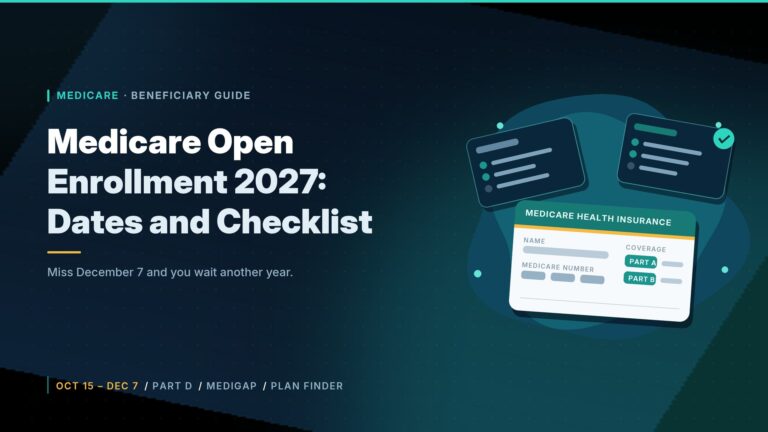
Medicare’s annual Open Enrollment runs from October 15 through December 7, 2026. Eligible coverage changes made during this period generally take effect January 1, 2027. The plan must receive the enrollment request by the deadline.
For a more detailed preparation guide, see our Medicare Open Enrollment dates and plan comparison checklist.
Before enrolling, use Medicare Plan Finder to review local options and save the relevant plan documents. Free assistance is available through State Health Insurance Assistance Programs, which help beneficiaries understand coverage, costs and enrollment choices.